
- Introduction: The Relatable SEO Paradox
There is a persistent myth in the digital marketing world that search engine optimization is a “pay-to-play” game reserved for those with massive corporate budgets. With premium industry tools typically starting at $129 per month, beginners frequently feel locked out of the data they need to compete. Even the more accessible options, like the Ahrefs $29/month Starter tier, represent a commitment for a solo creator just testing the waters
.
This creates a daunting paradox: you need authority to grow, but the tools to build that authority seem to require the very revenue you haven’t generated yet. The reality of the 2026 landscape is far more encouraging for the resourceful strategist. While enterprise subscriptions offer scale and convenience, the industry’s most critical data is currently accessible for free if you know where to look.
You don’t need a corporate credit card to uncover competitor link gaps or to spot toxic links that might be tanking your rankings. By leveraging “freemium” tiers and strategic off-page methods, you can build a robust SEO foundation without touching your wallet. This guide will show you how to navigate the shift toward AI-driven search and utilize professional-grade insights to establish your presence in the digital economy.
- The Shift: Why a “Mention” is the New Backlink
As we move through 2026, the traditional definition of a backlink is evolving. The rise of AI search agents like ChatGPT, Perplexity, and Google Gemini has introduced a new metric for authority: the unlinked brand mention. In this AI-driven era, search engines and Large Language Models (LLMs) utilize “entity recognition” to understand which brands are being discussed as authorities within specific niches.
This shift means that appearing in a discussion on a niche forum or being cited in an industry blog is valuable even without a clickable URL. AI systems analyze these mentions to vouch for a site’s credibility, looking for brands that show consistent authority within their vertical. Modern toolsets have adapted to this; for instance, Ahrefs’ “Brand Radar” and the “Semrush One” platform now prioritize tracking these “implied links” as primary visibility signals.
“The real shift in 2026: Google and AI systems care more about mentions (even unlinked ones) than before. Brand mentions on authoritative sites help with entity recognition, not just PageRank.” — AlexIrvin, Reddit
- The “Quality Pivot”: Why 5 Beats 100 Every Time
The era of high-volume, low-quality link building is officially dead. This isn’t just a trend; it is the culmination of a decade of algorithmic refinement that began with the Google Panda (2011) and Penguin (2012) updates. These milestones taught search engines to prioritize human value over technical manipulation, and 2026’s AI filters have only sharpened that focus.
What’s Dead:
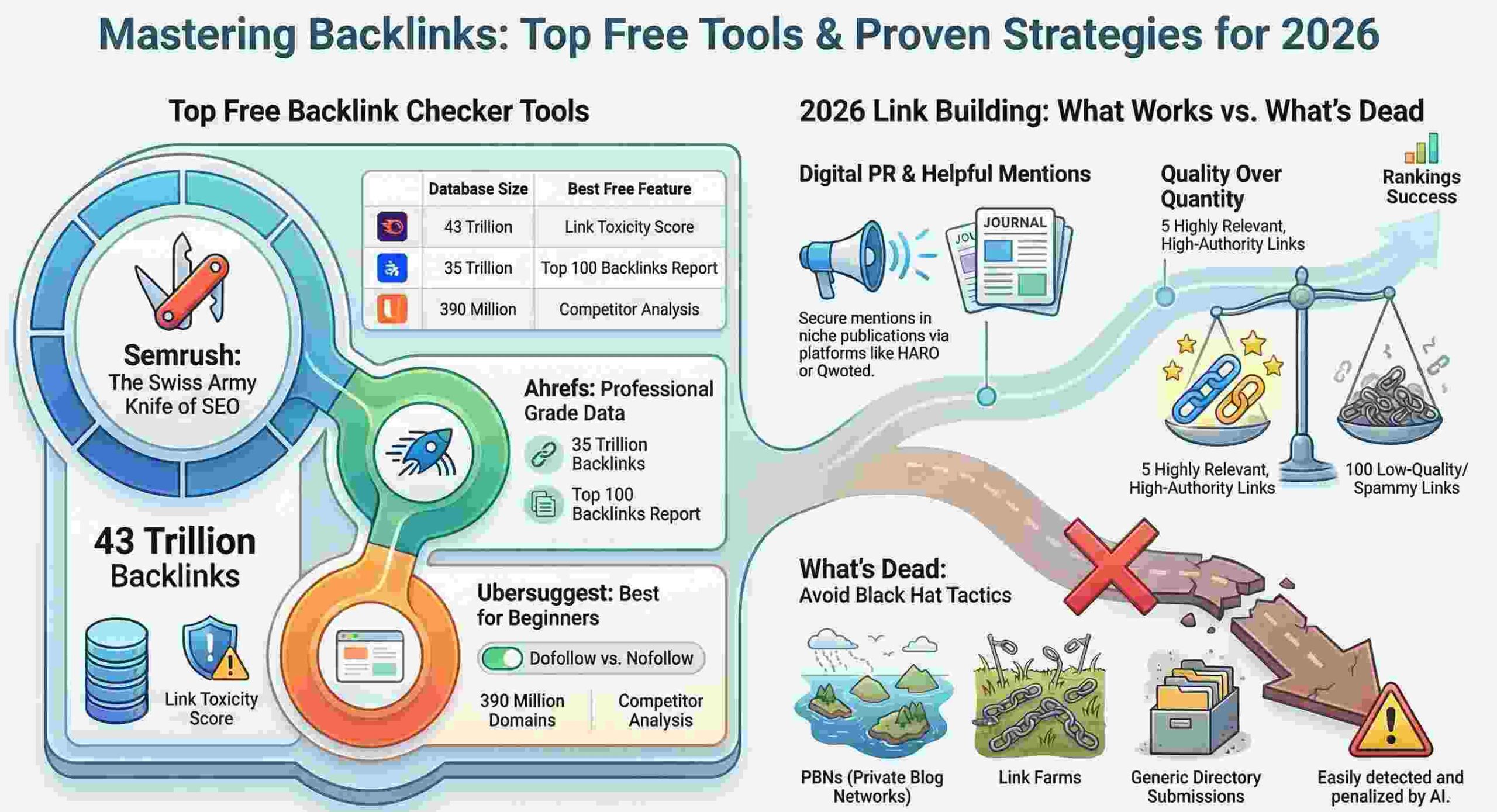
- PBNs and Link Farms: Google is now exceptionally efficient at detecting and discounting private blog networks.
- Generic Directories: Unless it is a highly relevant niche-specific directory, these offer almost zero SEO value.
- Automated Link Exchanges: Reciprocal “link for a link” schemes are too obvious for modern AI agents to ignore.
What’s Moving the Needle:
- Digital PR: Earning mentions in legitimate publications through expert quotes or unique data storytelling.
- Niche Community Participation: Being a helpful resource on platforms like Reddit, Quora, or industry-specific Slack groups.
- Helpfulness-Based Links: Naturally occurring links that result from creating genuinely useful tools, calculators, or guides.
This pivot toward quality is essential because black hat tactics now carry substantial, long-term risks. While buying links might deliver a temporary spike, search engines will eventually determine that you are keeping “shady company.” This association with low-quality neighborhoods can lead to permanent de-indexing or severe, irreversible ranking drops.
- The $0 Powerhouse: Accessing Enterprise Data Without a Subscription
You don’t need a high-tier subscription to use the tools that the pros use. Industry titans offer limited free versions that provide more than just a “taste” of professional-grade analysis. Ahrefs’ free backlink checker, for example, allows you to see the top 100 backlinks for any domain, drawing from a massive index of 35 trillion historical external links and a crawler that processes 8 billion pages daily.
Similarly, Semrush provides a “Toxicity Score” in its free tier and access to a database of 27.3 billion keywords. For a beginner, these tools are perfect for performing a “Competitor Backlink Analysis” to find “Link Gaps”—sites that link to multiple rivals but not to you. These represent your immediate, high-probability outreach opportunities.
Reflecting on why these companies offer such powerful free tiers reveals a strategic move: they are providing a data-onboarding path. By giving you a professional-grade starting point, they allow you to build a “Proof of Work” portfolio that eventually justifies the leap to their paid ecosystems.
“Your portfolio isn’t just a collection of links, it’s your proof of skill, your credibility, and your shortcut to trust with clients and companies.” — Riten Debnath, Founder of Fueler
- The Helpfulness Hack: Generating “White Hat” Authority for Free
Building authority for $0 requires a shift from “outreach” to “helpfulness.” There are dozens of actionable ways to attract high-quality backlinks by simply being a useful resource for others. Journalists and content creators are constantly looking for data and experts to fill their stories, and you can fill that gap without a PR agency.
- The Statistician’s Advantage: Create “Statistics Posts” or original data studies. Journalists are always hungry for fresh stats to cite in their articles; providing unique, well-researched data makes your site a natural citation target for high-authority news outlets.
- The Broken Link Rescue: This is a dual strategy. First, use Google Search Console to fix internal broken links (404 errors) on your own site that are still receiving external traffic. Second, identify competitor broken links and reach out to the linking webmaster to suggest your content as a superior, live replacement for their dead link.
- The Expert Quote Strategy: Use free services like HARO (Help A Reporter Out) or search the #JournoRequest hashtag on X (formerly Twitter). Responding to these queries with valuable, ready-to-publish insights can land you mentions in major publications like Forbes or Yahoo.
- The “Silent” SEO Guardian: Why Monitoring Toxicity is Non-Negotiable
Acquiring new links is only half the battle; the other half is protecting your site from “negative SEO.” Harmful links from link farms, forum signatures, or irrelevant foreign language sites can tarnish your reputation. Tools like SE Ranking and Semrush offer toxicity scores that flag these suspicious connections before they trigger a penalty.
To protect your site, you must become familiar with Google Search Console (GSC) and the Disavow tool. GSC allows you to see exactly which links Google recognizes as pointing to your domain. If you identify a considerable number of automatically generated or spammy backlinks, you can submit a disavow file to tell Google to ignore them.
Identifying these harmful connections is just as important as acquiring new ones. In the 2026 landscape, a “clean” link profile is a prerequisite for ranking. Regular monitoring ensures you aren’t held back by duplicate or spun content from external sites that you never authorized.
- Conclusion: The Future of Proof
The SEO landscape of 2026 has proven that while algorithms and AI assistants change, the core pillars of Trust and Authority remain. You no longer need a massive budget to prove your worth to search engines; you need a strategic focus on being helpful and visible across the platforms where your audience lives.
Whether you are using Ahrefs’ 35 trillion links to study a competitor or monitoring your own opportunities within Semrush’s 27.3 billion keywords, the data is there for the taking. The real challenge is no longer access—it is execution. How will you turn your “proof of work” into “proof of authority” to ensure you are the brand the AI assistants recommend?
❓ తరచుగా అడిగే ప్రశ్నలు (FAQs)
ఈ వార్త లేదా కథనంలో ముఖ్యమైన అంశం ఏమిటి?
Beyond the Hyperlink: 5 Surprising Truths About Building Authority in 2026 (For Free) గురించిన పూర్తి సమాచారం మరియు తాజా ముఖ్యాంశాలు ఈ కథనంలో సమగ్రంగా వివరించబడ్డాయి.
ఈ తాజా పరిణామం ఎందుకు ప్రాధాన్యత సంతరించుకుంది?
ప్రజా ప్రయోజనాలు, సంబంధిత వర్గాలు మరియు ప్రస్తుత పరిస్థితుల దృష్ట్యా ఈ పరిణామం అత్యంత కీలకమైనదిగా మారింది.
ఈ అంశంపై అధికారిక వివరాలు మరియు తాజా అప్డేట్స్ ఎక్కడ తెలుసుకోవచ్చు?
సంబంధిత అధికారిక వర్గాలు వెల్లడించే తదుపరి సమాచారం మరియు ప్రత్యక్ష అప్డేట్స్ కోసం మా వెబ్సైట్ను నిరంతరం ఫాలో అవ్వండి.