
Single List Shortcode:
AI WORKFLOW AUTOMATION TOOLS

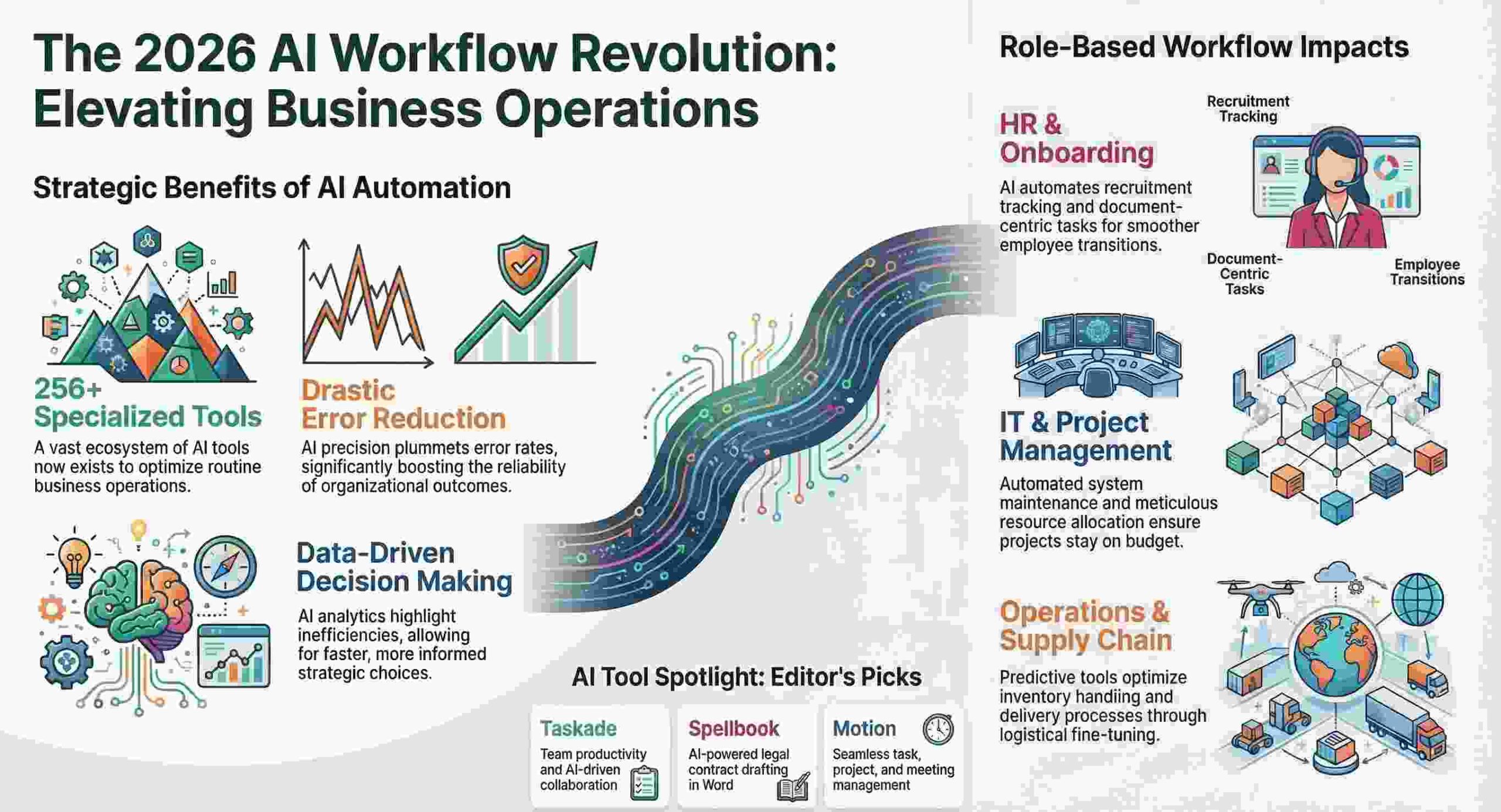
The business landscape of 2026 is defined by a rapid transition toward AI-powered workflow automation. This technological shift is characterized by the integration of agentic AI and low-code platforms that streamline operations, reduce error rates, and optimize decision-making across all organizational levels. Current data indicates a marketplace of over 250 specialized tools designed to handle everything from routine document processing to complex project management and autonomous system maintenance. Organizations that proactively adopt these technologies are positioning themselves for long-term success through enhanced agility and operational excellence. Success in this environment requires overcoming hurdles related to data security and system integration through robust strategic planning and departmental collaboration.
Core Benefits of AI Automation
The adoption of AI-driven tools is driven by four primary pillars of operational improvement:
- Routine Task Automation: AI manages repetitive, low-value tasks, allowing human capital to focus on strategic, high-value activities.
- Significant Error Reduction: The precision of AI minimizes manual mistakes, leading to higher reliability in data and outcomes.
- Process Optimization: Advanced analytics identify bottlenecks and inefficiencies, providing a roadmap for smoother operational flow.
- Data-Driven Decision-Making: AI-powered analysis allows for faster, more informed choices based on real-time data insights.
Specialized Tool Categories and Capabilities
The current ecosystem of 256 AI workflow tools offers specialized solutions across diverse sectors. These tools range from general-purpose automation to niche industry applications.
1. Development and Technical Operations
| Tool | Primary Function | Core Features |
| Tabnine | Coding Assistant | Personalized suggestions across various IDEs. |
| Cron AI | Code Automation | Converts plain text into precise cron expressions. |
| GPTExcel | Data Management | Generates formulas and scripts for spreadsheet efficiency. |
| Galileo | UI Design | Rapid prototyping and design collaboration via AI. |
| Gooey.AI | Deployment | Low-code workflows with robust system integration. |
2. Autonomous Agents and Complex Workflows
| Tool | Primary Function | Core Features |
| AutoGPT | AI Agents | Customizable agents for seamless workflow automation. |
| AgentGPT | Web Automation | Automates complex web-based tasks. |
| Adept | Agentic AI | Precision automation for complex, multi-step workflows. |
| Lindy AI | System Integration | No-code AI creation for workflow and system integration. |
| n8n | Complex Automation | Customizable integrations for intricate workflow builds. |
3. Productivity and Project Management
- Taskade: A unified platform for team productivity, task management, and collaboration.
- Motion: An AI-driven assistant for managing tasks, projects, and meetings seamlessly.
- BeforeSunset: Focuses on AI planning, time-blocking, and team collaboration.
- Tulsk.io: Enhances teamwork through AI-driven project management and collaboration.
- Dart: Provides streamlined project management through automated task handling.
4. Industry-Specific Solutions
- Legal: Spellbook integrates with Word to accelerate legal contract drafting.
- Gaming/Creative: Inworld creates dynamic NPCs and immersive worlds, while PrometheanAI manages digital assets and world-building.
- Sales/CRM: Tekmatix offers an all-in-one CRM and course creation platform; scope.money provides AI-driven sales insights with privacy-first scaling.
- Human Resources: Sonara automates job applications and matches, while Scribe creates detailed documentation and guides instantly.
Cross-Functional Impact of AI Integration
AI automation enhances specific roles within an organization by addressing their unique operational challenges:
- IT Teams: Automation handles system maintenance and deployment, which increases operational uptime and overall IT efficiency.
- Operations Managers: AI assists in logistical fine-tuning, specifically improving delivery processes and inventory handling.
- Project Managers: Tools facilitate meticulous resource allocation and planning, ensuring projects remain on schedule and within budget.
- HR Professionals: The recruitment and onboarding process is streamlined, leading to better employee tracking and engagement from the start.
Practical Applications in Business Practice
Beyond high-level strategy, AI automation is applied to specific, high-frequency business functions:
- Customer Support: Round-the-clock assistance via AI chatbots resolves queries quickly, improving satisfaction scores.
- Document and Data Handling: AI streamlines the extraction and processing of data, significantly reducing manual workloads in document-centric departments.
- Supply Chain Management: Predictive AI tools refine logistics by anticipating needs and optimizing inventory levels.
- Big Data Analysis: Platforms like Gigasheet allow for AI-enhanced analysis of large datasets using a familiar spreadsheet interface without requiring code.
Challenges and Strategic Implementation
While the benefits are extensive, the transition to AI-driven workflows involves navigating several implementation hurdles:
- Complex Integration: Successfully merging AI tools with existing legacy systems requires detailed technical planning.
- Data Security: Protecting sensitive information during the automation process is a critical concern that demands robust data governance.
- Alignment with Goals: Success is dependent on ensuring that AI tools directly support broader business objectives.
- Personnel Training: Continuous training for staff is essential to ensure they can effectively collaborate with new AI systems.
To overcome these challenges, organizations must foster cross-departmental collaboration and maintain a proactive approach to adopting evolving technologies. This strategic alignment is necessary to establish new benchmarks for operational excellence in a competitive global marketplace.